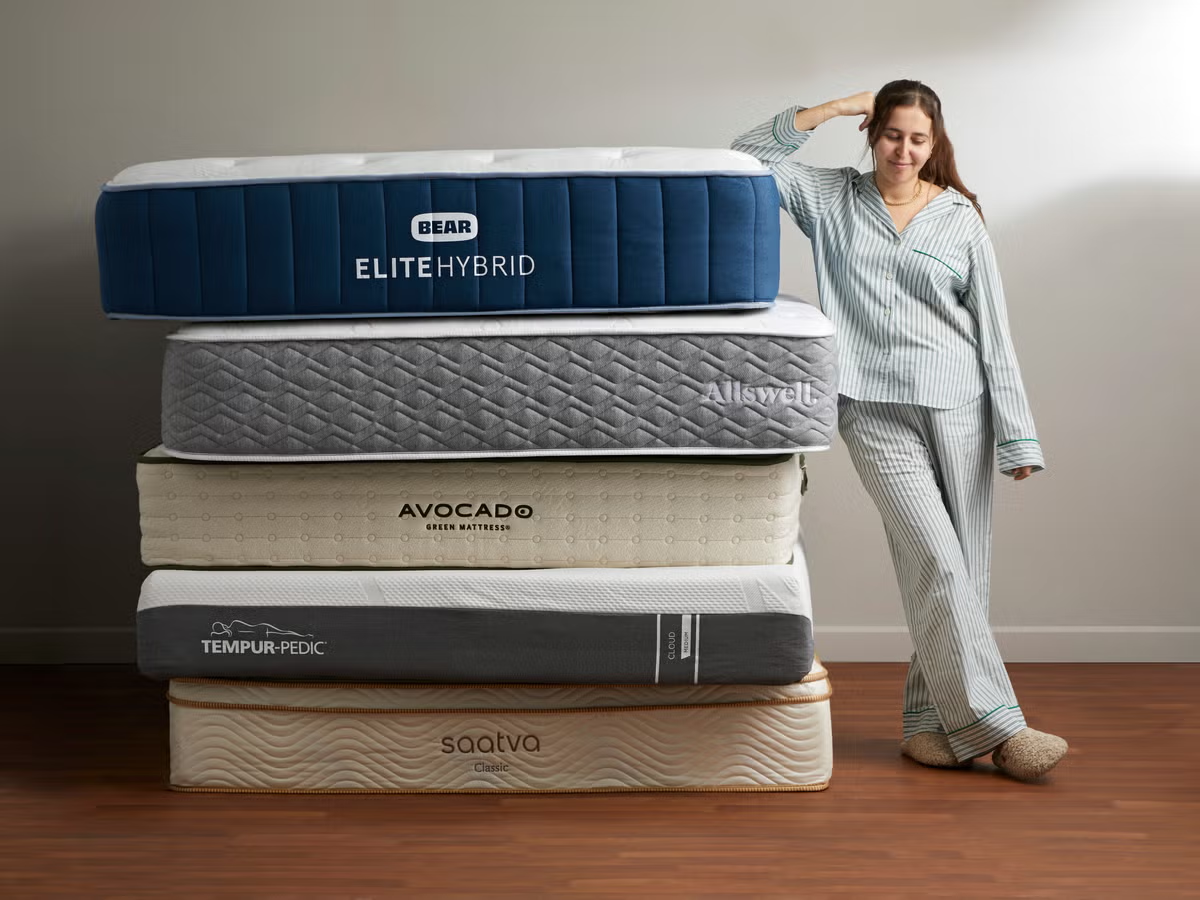
Primary sources: Grand View Research ·
Global Market Insights ·
Polaris Market Research ·
Fortune Business Insights ·
Market Data Forecast
📋 Methodology note: why the numbers vary between sources
Different market research houses produce different valuations for the same market — you will see figures ranging from USD 32 billion to USD 55 billion for “the global mattress market in 2024.” These differences reflect varying scope (some include only mattresses, others include all bedding), varying geographic coverage, and different data collection methodologies. We have used the Grand View Research baseline of USD 46.48 billion (2024) as the primary reference throughout this article, as it is the most widely cited by journalists and the most methodologically transparent. All other figures are presented with their source clearly noted. Where ranges are given, we present both.
Every night, approximately 4 billion people lie down on a mattress. Aggregated across billions of households, hospitality properties, hospitals, and dormitories, the global mattress market represents one of the most universally necessary consumer product categories in the world — and one of the most data-rich.
This article synthesises the key statistics from 12 primary market research reports into a single, free, clearly sourced reference. We cover market size and growth trajectory, regional breakdown, product type segmentation, size distribution, distribution channel trends, end-use splits, and the brands dominating the industry. Whether you are a journalist, analyst, student, property professional, or simply a consumer trying to understand the market you are buying into, this is the complete picture.
1. Global Market Size and Growth Trajectory
The global mattress market is large, growing, and structurally driven by forces that are unlikely to reverse: population growth, urbanisation, rising income in developing markets, and increasing consumer awareness of sleep as a health priority. Here are the headline figures from the leading research houses, presented side-by-side for comparison:
| Research House | 2024 Market Size | CAGR | Forecast Year | Projected Size |
|---|---|---|---|---|
| Grand View Research ★ | $46.48B | 6.5% | 2030 | $67.51B |
| Polaris Market Research | $46.60B | 6.6% | 2034 | $88.09B |
| Market Data Forecast | $46.34B | 6.64% | 2033 | $82.65B |
| Data Bridge Market Research | $47.86B | ~7% | 2032 | $80.41B |
| Fortune Business Insights | $54.75B | 6.82% | 2032 | $91.23B |
| Global Market Insights | $48.6B | 5.3% | 2034 | — |
| SkyQuest | $44.46B | 6.2% | 2033 | $76.39B |
★ Grand View Research is the primary reference used throughout this article due to widest citation. Other figures shown for transparency and comparison.
2. Regional Market Share: North America Leads, Asia-Pacific Grows Fastest
The global mattress market is regionally concentrated, with North America dominant but Asia-Pacific growing rapidly. The average American spends approximately $1,000 annually on sleep-related products, according to Market Data Forecast — creating a structurally high-revenue market that outpaces most other regions in spending per household.
Global Mattress Market — Revenue Share by Region (2024)
Sources: Grand View Research; Market Data Forecast
34–35.4% ← Largest region
US accounts for ~75–80% of North American revenue. Consumer preference for premium, memory foam, and smart mattresses drives high average selling prices. Strong online DTC channels.
~28% ↑ Fastest growing (CAGR 8.2%)
China, India, Japan, and South Korea driving growth. UN projects 50% of Asia’s population will be urban by 2030, creating massive new household formation. India’s residential property boom in 2023 is a specific catalyst.
~24% — Mature, premium-focused
Germany, UK, France, and Italy are primary markets. Strong preference for latex and eco-certified materials. Silentnight (UK), Emma (Germany), and IKEA are major market participants.
~8% — Growing
Brazil is the primary market. Middle-class expansion driving demand for mid-range products.
~6% — SA leads MEA
South Africa is the largest mattress market in the MEA region. UAE and Saudi Arabia growing rapidly in the hospitality segment. Smallest global share but above-average per-capita spending in Gulf states.
Source: Grand View Research 2025, Market Data Forecast 2033 report. Shares are approximate and vary slightly between research houses.
3. Product Type Segmentation: Foam Dominates, Hybrid Grows Fastest
The product type breakdown is where the most strategically important market data lives. The balance between foam, innerspring, hybrid, and latex reveals both current consumer preferences and the direction the market is moving. The convergence across research houses is strong on the key findings.
Foam
45%
Revenue share 2024
Dominant segment globally. Includes memory foam, poly-foam, and gel-infused variants. Motion isolation and pressure relief make it ideal for couples. Compatible with adjustable bases drives C&I adoption. Innerspring segment: $16.9B revenue in 2024 (GMI) — significant but declining market share.
Hybrid
9.3%
CAGR — Fastest growing
Combines innerspring coil support with foam comfort layers. Grand View Research projects hybrid CAGR of 6.8%; Market Data Forecast reports 9.3% — highest of any type. The American Chiropractic Association endorses hybrid for superior spinal alignment, serving 31M+ Americans with lower back pain.
Innerspring
5.6%
CAGR 2025–2034
Traditional coil-spring construction. $16.9B in 2024 revenue (GMI). Popular among budget-conscious consumers for durability and airflow. Declining share but still large absolute revenue. Slowest CAGR of the four main types.
Latex
Premium
Price range: $1,900–$2,000+
Natural and synthetic latex. Smallest revenue share by volume. Growing due to eco-conscious consumers; natural latex is biodegradable and hypoallergenic. IMARC Group notes latex mattresses priced $1,900–$2,000. Durability advantage over foam justifies premium price long-term.
4. Market Share by Mattress Size: Queen Dominates Globally
The size breakdown is remarkably consistent across all research houses — queen-size mattresses are the global standard, and by a wide margin. This is not merely an American preference: the queen-size format’s combination of comfort for couples and fit in standard bedroom dimensions applies across cultures and geographies.
| Size | Global Share 2024 | CAGR Forecast | Key Driver |
|---|---|---|---|
| Queen ⭐ Largest | 40.3–46% | Strong | Ideal for couples and single sleepers seeking space. Fits standard bedrooms across all income levels globally. Multiple research houses confirm this as the dominant segment by revenue. |
| King | Second largest | 6.7% CAGR ↑ | Fastest-growing size segment by CAGR. Rising affluence in North America and Asia-Pacific driving preference for larger sleeping surfaces. Premium product alignment boosts revenue. |
| Full / Double | Third | Moderate | Important in developing markets where bedroom sizes are smaller and budget constraints matter. Also common in student accommodation and first-home purchases. |
| Twin / Single | Smallest share | Stable | Children’s rooms, dormitories, bunk beds, and healthcare facilities. Volume is high but revenue per unit is low. Important for commercial (hospitality, healthcare) end-use segments. |
Sources: Grand View Research (46% share); Market Data Forecast (40.3% share). Variance reflects different methodologies.
5. Distribution Channels: The Online Revolution
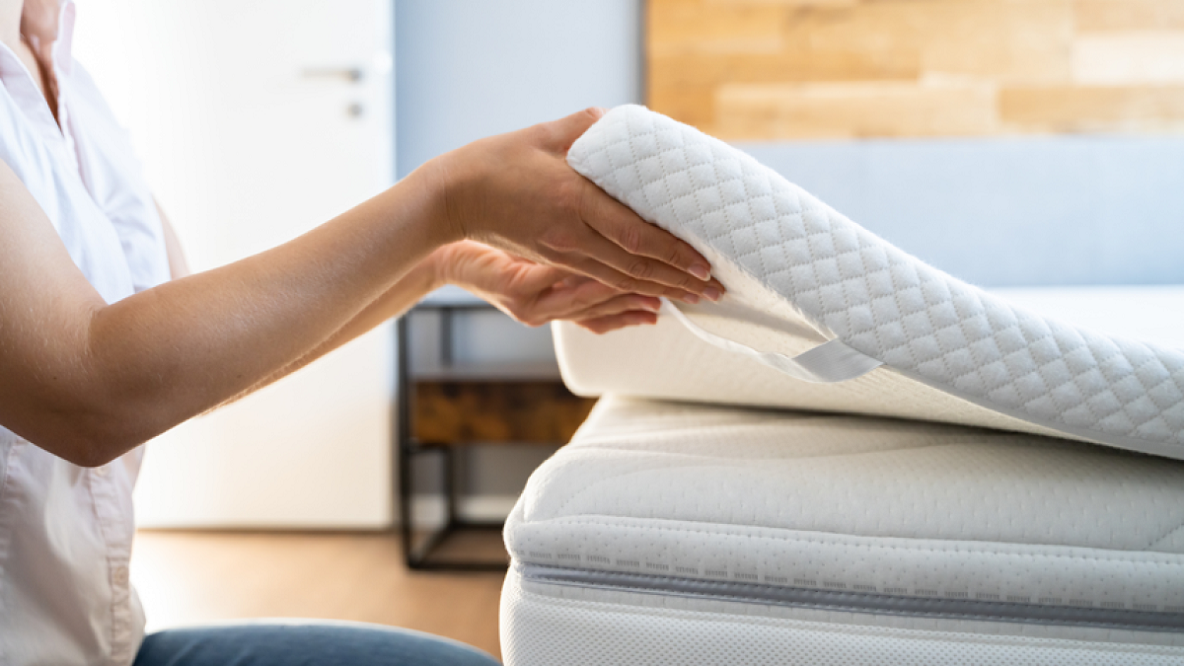
Perhaps no segment of mattress market data has shifted as dramatically in the past decade as distribution. The rise of direct-to-consumer (DTC) online mattress brands — Casper, Saatva, Purple, and their global equivalents — fundamentally changed how mattresses are bought and sold. The data tells a clear story.
Online share in 2015
Online mattress sales were effectively a niche. Physical stores dominated entirely.
Better Sleep Council
Online share by 2020
3× increase in five years. COVID-19 lockdowns accelerated the shift dramatically in 2020.
Better Sleep Council
DTC sales growth 2016–2021
Direct-to-consumer brands grew sales 150% in five years per US Department of Commerce.
US Dept. of Commerce
Projected online CAGR
Online distribution projected as the fastest-growing channel through 2030. US Q1 2025 e-commerce up 6.1% YoY (US Census Bureau).
Polaris / GVR
Key enablers of the online shift include 100-night trial periods (essentially unthinkable before Casper normalised them in 2014), flat-pack mattress-in-a-box delivery that dramatically reduced logistics costs, and the ability to read thousands of verified reviews before purchasing. According to Grand View Research, the online channel is expected to register a substantial growth rate over the entire forecast period to 2030.
6. End-Use Breakdown: Households Dominate, Commercial Growing
Market Share by End Use — 2024
78–79% ← Dominant
Consumer spending on household mattresses driven by growing homeownership, increasing awareness of sleep health, and lifestyle upgrading. Expected fastest CAGR among end-use segments through 2030 as premium products become more accessible.
~22% — CAGR 5.1%
Hotels, resorts, hospitals, and student accommodation drive commercial demand. Healthcare is specifically driving memory foam adoption as patient care standards rise. Hospitality sector prioritises guest comfort as a competitive differentiator.
Sources: Grand View Research (78% household); Global Market Insights (79% residential, 5.1% commercial CAGR)
7. Key Market Trends Shaping the Next Decade
Sleep Health as a Consumer Priority
The CDC reports 35.2% of US adults sleep fewer than 7 hours per night. The NIH reports Americans spend $16.5 billion annually on sleep-related products. Growing clinical evidence linking poor sleep to chronic disease is driving a fundamental shift from mattresses as commodity to mattresses as health investment.
Smart Mattresses
Integration of sensors, temperature controls, and app connectivity is redefining premium mattresses. Features include sleep tracking, heart rate monitoring, adjustable firmness, and smart home integration. Sleep Number’s smart beds, Eight Sleep’s temperature-regulating Pod mattresses, and similar innovations are a fast-growing niche within the premium segment.
Sustainability and Organic Materials
Consumer preference for eco-friendly products is driving demand for organic cotton covers, natural latex filling, GOTS-certified materials, and CertiPUR-US foam. The sustainability premium is commanding 15–30% higher prices in the DTC online segment, where environmentally conscious millennials are the core demographic.
Urbanisation and Household Formation
The UN projects 68% of the global population will be urban by 2050. Each newly formed urban household is a mattress purchaser. Asia-Pacific’s 8.2% CAGR is directly tied to China’s and India’s urbanisation rate — hundreds of millions of new middle-class consumers entering the mattress market for the first time within the forecast period.
Bed-in-a-Box / DTC Revolution
The compressed, rolled mattress format that ships in a box fundamentally changed the economics of mattress retail. Brands like Casper, Emma, Purple, and local equivalents worldwide can now sell directly to consumers with 100-night trials, free returns, and no showroom overhead. Online sales grew from 7% (2015) to 21% (2020) of total mattress sales — and accelerated further post-2020.
Hospitality Premiumisation
Hotels are increasingly using mattress quality as a competitive differentiator — the “hotel bed feeling” is now a marketing concept. Luxury hotel groups specify custom mattresses and bed frames that hotel guests can then purchase directly. Marriott, Hilton, and other chains have retail stores for their bedding products.
8. Major Brands and Market Leaders
The global mattress market is semi-consolidated — a handful of large multinational brands dominate premium segments, while thousands of regional manufacturers hold significant local market share. Here are the globally recognised leaders cited across all major research reports:
| Brand / Company | Country | Key Brands / Notes | Market Position |
|---|---|---|---|
| Tempur Sealy International | 🇺🇸 USA | Tempur-Pedic, Sealy, Stearns & Foster. In 2024, announced plans to acquire Mattress Firm. | Global #1 by revenue |
| Serta Simmons Bedding | 🇺🇸 USA | Serta, Simmons Beautyrest. Innerspring, hybrid, and memory foam range. Leading North American brand. | Global #2 |
| Sleep Number | 🇺🇸 USA | Adjustable air chamber smart mattresses. Pioneer of sleep-tracking technology. | Smart/premium segment |
| Casper Sleep | 🇺🇸 USA | Pioneer of the DTC mattress-in-a-box model. 100-night trial. Now a private company. | DTC pioneer |
| Emma Sleep | 🇩🇪 Germany | Europe’s largest DTC mattress brand. Present in 30+ countries including South Africa. | European DTC leader |
| Silentnight Group | 🇬🇧 UK | UK market leader. Wide range across price tiers. Strong retail and online presence. | UK #1 |
| Hästens | 🇸🇪 Sweden | Ultra-luxury handmade mattresses ($5,000–$395,000+). First SA showroom opened Knysna, Sep 2025. | Ultra-premium global |
Sources: Grand View Research; Market Data Forecast; SkyQuest
9. Complete Quick-Reference Statistics Table
For journalists, researchers, and analysts who need a quick-reference list of all key figures in one place — here is the comprehensive table. All figures are sourced and dated.
| Statistic | Figure | Source |
|---|---|---|
| Global market size, 2024 | $46.48B | Grand View Research |
| Projected market size, 2030 | $67.51B | Grand View Research |
| Market CAGR 2025–2030 | 6.5% | Grand View Research |
| Foam segment market share, 2024 | ~45% | Grand View Research |
| Hybrid mattress CAGR (fastest growing type) | 9.3% | Market Data Forecast |
| Innerspring revenue, 2024 | $16.9B | Global Market Insights |
| Queen-size market share, 2024 | 40.3–46% | Grand View Research / Market Data Forecast |
| King-size CAGR (fastest size) | 6.7% | Grand View Research |
| North America market share, 2024 | 34–35.4% | Grand View Research / Market Data Forecast |
| Asia-Pacific CAGR (fastest region) | 8.2% | Market Data Forecast |
| US market share within North America | ~75–80% | Grand View Research |
| Household / residential segment share | 78–79% | Grand View Research |
| Online channel share of sales, 2015 | 7% | Better Sleep Council |
| Online channel share of sales, 2020 | 21% | Better Sleep Council |
| DTC brand sales growth 2016–2021 | +150% | US Department of Commerce |
| Average American annual sleep product spend | $1,000 | Market Data Forecast |
| US annual sleep product total spend | $16.5B | NIH |
| US adults sleeping <7 hrs/night | 35.2% | CDC |
| Latex mattress price range | $1,900–$2,000+ | Data Bridge Market Research |
Frequently Asked Questions
What is the size of the global mattress market in 2024?
The global mattress market was valued at approximately USD 46.48 billion in 2024, according to Grand View Research — the most widely cited figure. Other research houses report slightly different valuations depending on scope and methodology, ranging from USD 44.46 billion (SkyQuest) to USD 54.75 billion (Fortune Business Insights). The Grand View Research figure is used as the primary reference in this article. The market is forecast to reach USD 67.51 billion by 2030 at a CAGR of 6.5%.
Which mattress type has the largest global market share?
Foam mattresses (including memory foam and poly-foam) hold the largest market share globally, accounting for approximately 45% of total revenue in 2024, according to Grand View Research. This dominance reflects foam’s advantages in pressure relief, motion isolation, and compatibility with adjustable bed bases. Innerspring remains the second-largest type by revenue ($16.9 billion in 2024 per Global Market Insights), while hybrid mattresses are the fastest-growing type at a CAGR of 6.8–9.3%.
Which mattress size is most popular globally?
Queen-size mattresses are the most popular globally, accounting for 40.3–46% of global market share by revenue in 2024 depending on the research source. The queen-size format offers an ideal balance of sleeping space for couples and single sleepers while fitting standard bedroom dimensions across most markets. King-size mattresses are the fastest-growing size segment by CAGR (6.7%), driven by rising affluence in North America and Asia-Pacific.
Which region leads the global mattress market?
North America is the largest regional mattress market, holding approximately 34–35.4% of global market share in 2024, with the United States accounting for 75–80% of the region’s revenue. Asia-Pacific is the fastest-growing region at a CAGR of 8.2%, driven by rapid urbanisation in China and India. Europe holds approximately 24% of the global market, with strong demand for premium and eco-certified products.
What are the key growth drivers of the global mattress market?
The primary growth drivers are: growing consumer awareness of sleep as a health priority; rapid urbanisation creating new households globally; rising disposable incomes in Asia-Pacific and Latin America; the e-commerce revolution enabling DTC brands with 100-night trials; demand for smart and customisable mattresses; the hospitality sector’s premiumisation of guest sleep experiences; and increasing healthcare sector demand for high-quality medical mattresses. All major research houses cite sleep health awareness as the leading structural driver.
All Sources — Global Mattress Market 2024
- Grand View Research — Global Mattress Market Size, Share & Growth Analysis Report, 2030 (★ Primary source)
- Grand View Research — Mattress Market to Reach $67.51Bn By 2030 (press release)
- Polaris Market Research — Mattress Market Size, Share & Growth Report, 2034
- Market Data Forecast — Mattress Market Size, Share, Trends & Growth Forecast Report, 2033
- Global Market Insights — Mattress Market Share, Statistics & Forecast, 2025–2034
- Data Bridge Market Research — Global Mattress Market – Industry Trends & Forecast to 2032
- Fortune Business Insights — Mattress Market to Surge at a CAGR of 6.82% over 2025 to 2032
- SkyQuest — Mattress Market Size | Growth | Forecast Report [2033]
- Verified Market Research — Mattress Market Size, Share, Trends & Opportunities, & Forecast
- Research & Markets via BusinessWire — Global Mattress Market Forecasts 2023–2030
- Beds and All — South African Bed and Mattress Specialists
Update schedule: This article is updated annually when new primary market research reports are published, typically Q1 of each calendar year. Next planned update: April 2027 to incorporate 2025 full-year market data.
Disclaimer: Market size figures vary between research houses due to different methodologies, geographic scope, and product definitions. All figures are presented with their source. This article does not constitute financial or investment advice.