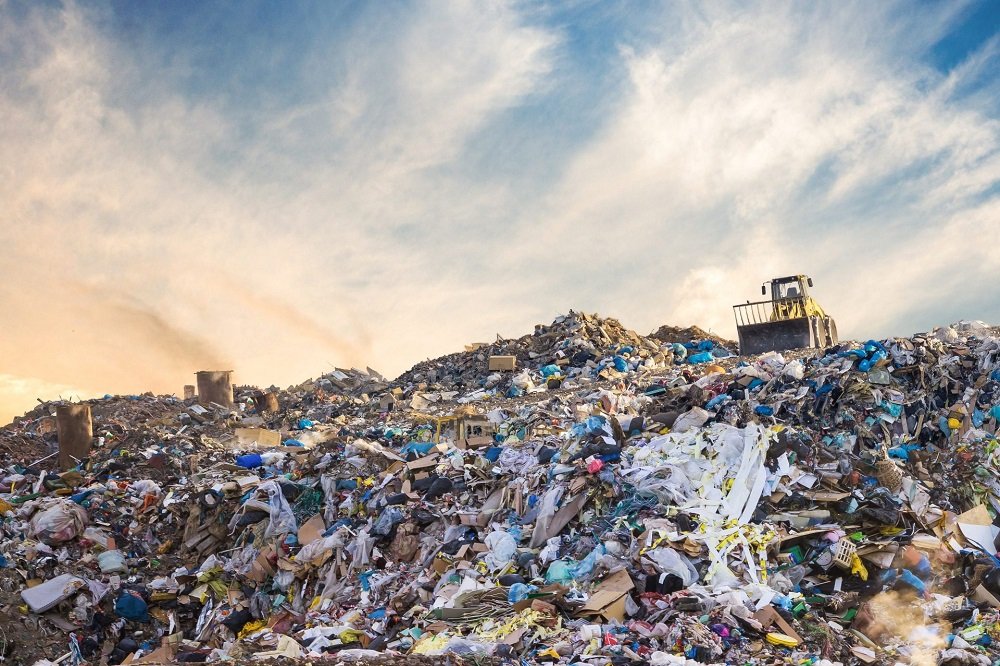
Every night, approximately 60 million South Africans and billions more people around the world sleep on a mattress. The question that almost nobody asks is: what happens to it when it is done? The answer — for the overwhelming majority of the world’s mattresses — is landfill. And not just any landfill item: mattresses are among the worst offenders in the modern waste stream.
In the United States alone, an estimated 18–20 million mattresses are discarded every single year — approximately 50,000 per day. They fill 1.5 million dump trucks. Stacked end to end, they would reach higher than Mount Everest. And once buried, the average mattress takes 80 to 120 years to decompose in landfill conditions. This is happening simultaneously in every country that has a mattress market — which is every country on earth.
This guide compiles the most comprehensive global mattress waste and recycling statistics available — by country, by disposal pathway, by material, and by legislation status. It is sourced from the Mattress Recycling Council (MRC), the Product Stewardship Institute (PSI), Europur, and the US EPA. It is updated annually.
The Scale of the Problem: 50,000 Mattresses a Day in the United States
The United States is the most documented case of the mattress waste crisis, for the straightforward reason that it has the world’s largest mattress market and the most comprehensive disposal tracking. The figures, sourced directly from the Product Stewardship Institute and the EPA, establish the baseline for understanding how serious this problem is.
Where Do US Mattresses Actually Go?
75–80% ← Dominant pathway
Mattresses are bulky, hard to handle, and expensive for processors. The default destination for the vast majority.
10–15%
Mattresses are one of the most frequently illegally dumped items in the US. Cities spend millions annually on clean-up.
5–10% only
Facilities break down steel, foam, fabric, and wood for reuse. Capacity is limited. Processing costs are high relative to recovered material value.
3–5%
A small percentage in good condition are donated to charities or resold through secondhand channels.
Source: Sharetown Mattress Waste Statistics, March 2026; Product Stewardship Institute
Why Mattresses Are Among the Worst Landfill Items
Not all landfill waste is equally problematic. Mattresses are particularly poor candidates for landfill for several compounding reasons — each of which contributes to why the mattress waste crisis deserves specific policy attention.
Volume and incompressibility
A single queen mattress occupies approximately 23 cubic feet of landfill space. Unlike most items, mattresses resist compaction — landfill machinery cannot crush them down. They also tend to “spring back,” creating voids in landfill that destabilise the structure. This is why some landfills charge a mattress-specific surcharge.
80–120 year decomposition
The synthetic foam, polyester fibres, and treated fabrics in a modern mattress are engineered for durability — the same property that makes them comfortable to sleep on for a decade makes them persist in landfill for up to a century. Steel coils corrode but persist even longer. A mattress bought in 2026 will still be decomposing in 2126.
Chemical leaching
As mattresses decompose, they release flame retardant chemicals (historically including PBDE and other brominated compounds), volatile organic compounds (VOCs) from synthetic foam, and potential heavy metals from springs and coatings. These can leach into groundwater through landfill liner failures — a concern highlighted by the EPA’s encouragement of mattress recycling over disposal.
Mixed composite construction
A single mattress contains 5–10 distinct materials that are bonded or compressed together: polyurethane foam, steel springs, polyester fibres, cotton batting, fire-resistant fabric, adhesives, and border tape. These materials cannot be easily separated at standard recycling facilities — specialised equipment and labour are required, making mattress recycling inherently more expensive than most recyclable categories.
What Is Inside a Typical Mattress? (MRC 2025 Waste Characterisation Study)
Recyclable; foam insulation, carpet underlay
Recycled fibre; often landfilled
Polyester; partial recycling
High-value recyclable; steel scrap market
~1,300 tonnes extracted annually; composting viable
Source: Mattress Recycling Council — Waste Characterisation Study, September 2025. Top three categories as percentage of residual (landfilled) material from California mattress recyclers.
The Global Picture: Disposal Estimates by Country
The US data is the most comprehensive because it has the most developed tracking infrastructure. But the mattress waste problem is global. Here are the best available estimates for major markets, with sources for each.
| Country | Annual Disposal Estimate | Recycling Rate | Take-Back Law? | Status |
|---|---|---|---|---|
| 🇺🇸 USA | 18–20 million/yr | <5–10% | Yes (4 states) | CA, CT, RI, OR have EPR laws. Federal EPA encourages but does not mandate recycling. Only ~2M/yr recycled in EPR states. |
| 🇫🇷 France | ~5–7 million/yr | ~50% | Yes — EPR since 2012 | France’s national EPR scheme through Eco-Mobilier is the most advanced globally. Covers all soft furnishings including mattresses. ~50% of collected materials recycled; remainder to energy recovery. |
| 🇬🇧 UK | ~7–9 million/yr | <5% | Partial | UK has household waste recycling centre networks but no specific national mattress EPR. National Bed Federation has voluntary take-back guidelines. Extended Producer Responsibility reform ongoing post-2024. |
| 🇩🇪 Germany | ~5–8 million/yr | Moderate | Via EU Directive | Germany’s general recycling infrastructure handles some mattress materials. EU Waste Framework Directive creates baseline requirements. PU foam recovery via Recticel and others is well established. |
| 🇦🇺 Australia | ~1.8 million/yr | <5% | No national law | Australia’s National Mattress Recycling Scheme (AMRS) is voluntary. Some state-level programs exist. Growing sustainability pressure may produce national EPR legislation. |
| 🇨🇦 Canada | ~3–4 million/yr | <5% | Provincial only | No federal mattress recycling legislation. Some provincial programs (British Columbia has a stewardship approach). Industry initiatives are fragmented. |
| 🌍 South Africa | Estimated 1–2 million/yr | <1% | No | No national mattress recycling legislation. Some private sector initiatives exist. South Africa’s Extended Producer Responsibility regulations (GN R1184, 2021) cover paper, glass, plastic and metal — mattresses are not yet included. |
Sources: Product Stewardship Institute; Europur 2025; individual national recycling body data. Disposal estimates are approximations based on market size and replacement cycle data.
Legislation That Is Working: The EPR Model
Extended Producer Responsibility (EPR) is the policy framework that has produced the most significant results in mattress recycling globally. It places legal responsibility for end-of-life disposal on manufacturers and retailers rather than municipalities or consumers. Where it has been implemented, recycling rates have risen dramatically compared to unregulated markets.
Mattress EPR Legislation Timeline
2012 — France: First national EPR system (Eco-Mobilier)
Eco-Mobilier launched in France as the first national mattress (and soft furnishings) EPR scheme globally. Manufacturers pay an eco-contribution per mattress sold; funds are used to finance collection and recycling. France achieves approximately 50% recycling rate of collected mattresses — the global benchmark.
2013 — Connecticut, USA: First state EPR law (inspired PSI model legislation)
Connecticut became the first US state to enact a mattress EPR law, using the Product Stewardship Institute’s model legislation. The Bye Bye Mattress program, managed by the Mattress Recycling Council (MRC), launched in 2015. As of the 2024–25 fiscal year, over 1.9 million mattresses have been recycled in Connecticut alone.
2015–2016 — California and Rhode Island join
California and Rhode Island enacted their own mattress EPR laws. The three-state MRC program (CA, CT, RI) now collectively recycles approximately 2 million mattresses annually. Rhode Island’s recycling fee stands at $20.50 per unit as of January 2024.
2021 — Oregon becomes the fourth US state
Oregon passed mattress EPR legislation in 2021, further expanding the US mandatory recycling footprint. The Mattress Recycling Council extended its Bye Bye Mattress program to Oregon.
2024 — EU Ecodesign for Sustainable Products Regulation (ESPR)
The EU’s landmark ESPR regulation, adopted in 2024, will eventually mandate design-for-disassembly requirements for mattresses sold across the EU — making them easier to recycle at end of life. The regulation’s mattress-specific delegated acts are expected by 2027–2028, according to Europur’s 2025 analysis.
2025 — MRC Waste Characterisation Study updates CA data
The MRC September 2025 report identified that polyurethane foam (19.5%), shoddy felt pad (15.6%), and mixed non-woven fibres (14.7%) are the largest residual waste categories from recycled mattresses — informing where future research and secondary market development needs to focus.
What Happens When a Mattress Is Properly Recycled?
The 90% recyclability figure from the Product Stewardship Institute is remarkable — and verified. A mattress that reaches a proper recycling facility is broken into its component materials, each of which has a documented end-use market. Here is what each material becomes:
Steel coils and springs
Smelted and reused in new steel products — automotive parts, construction materials, and appliances. Steel is the most valuable recovered material from mattress recycling. The MRC CT report recovered 3,643 tonnes of combined materials including steel in FY2024–25.
Polyurethane foam
Ground into carpet underlay (the most common secondary use), used as packaging foam, or shredded for equestrian arena footing and industrial applications. Arizona State University research (MRC-funded) showed surface-treated mattress foam can triple oil absorption capacity — opening oil spill clean-up as a novel application.
Cotton and natural fibres
Approximately 1,300 tonnes of cotton and coir (coconut fibre) are extracted from discarded mattresses annually in the US. A 2022–23 MRC study showed commercial composting is a viable destination — GreenWaste Z-Best in California demonstrated standardised processing and testing proves mattress cotton composts successfully.
Timber and wood
Found primarily in platform beds and some older mattress frames. Chipped for biomass fuel, mulch, or particleboard manufacturing. Lower value than steel but fully recyclable.
Polyester and synthetic fibres
Used in industrial insulation products, stuffing for toys and cushions, and horse saddle pads. The Europur 2025 analysis notes approximately 8,700 tonnes of PU foam are currently recovered for recycling in Europe annually.
What cannot be recycled yet
Mixed non-woven fibres (14.7% of residual waste), border tape, adhesives, and fire-resistant chemical coatings remain difficult to separate and recycle economically. These are the categories the EU’s ESPR regulation aims to address through design-for-disassembly requirements. The Europur 2025 report notes ~3,900 tonnes of PU foam goes to energy recovery rather than material recycling due to contamination.
The Economics of Mattress Recycling: Why It Is Hard and How to Fix It
Understanding why mattress recycling remains so limited despite 90% material recyclability requires understanding the economics. The problem is not technical capability — it is cost structure.
The Cost Problem — and the CO₂ Context
High processing cost vs. low recovered value
Mattress recycling is labour-intensive: each unit must be manually or mechanically disassembled. Processing a single mattress costs $25–$50 in the US. The recovered materials — mostly foam and fibre — have modest secondary market value. Only the steel coils have high scrap value. This negative economics gap is why recycling rates stay low without policy intervention.
CO₂ cost: €138 per tonne avoided through recycling
Research in the Netherlands cited by Europur (2025) found that avoiding one tonne of CO₂ through mattress recycling costs approximately €138. The EU Emissions Trading System (ETS) CO₂ allowance price averaged ~€65/tonne in 2024. This means mattress recycling is approximately twice as expensive per tonne of CO₂ avoided as purchasing ETS allowances — confirming that without specific policy mechanisms, the market will not self-correct.
Why EPR fees are the solution
EPR schemes close the economics gap by spreading the processing cost across the consumer purchase price rather than charging it at point of disposal. Rhode Island’s $20.50 per mattress fee (January 2024) funds the collection and processing infrastructure. The consumer effectively pre-pays for recycling at point of purchase — a model that aligns incentives and eliminates the “someone else’s problem” dynamic that produces landfill-default outcomes.
Sources: Europur — Mattress Recycling in Europe, July 2025; Mattress Guy Co. — Mattress Recycling Laws USA, 2026
What Consumers Can Do: Practical Steps for Responsible Mattress Disposal
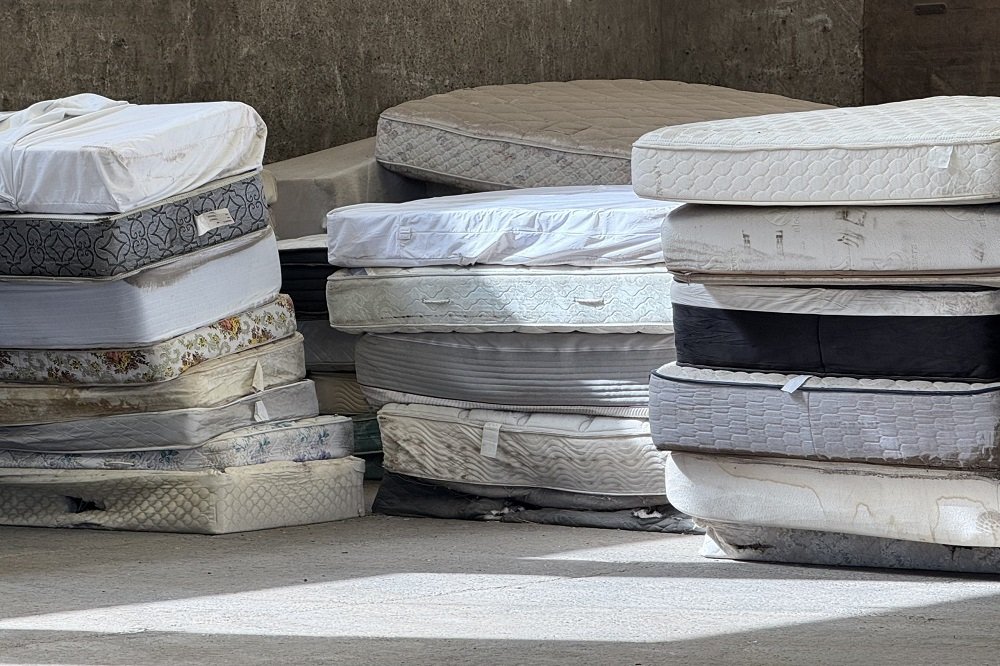
Most of the leverage in the mattress waste crisis lies at the policy level — EPR legislation, design standards, and secondary market development. But consumers in every country have practical options to avoid their mattress becoming landfill.
If you are in California, Connecticut, Rhode Island, or Oregon, visit byebyemattress.com to find your nearest participating drop-off location. These are managed by the MRC as part of the state EPR programmes.
Many mattress retailers now offer old mattress collection when delivering a new one. This is especially common with online DTC brands operating “white glove” delivery services. Always ask — even if it is not prominently advertised, many retailers have partnerships with local recyclers.
A mattress in good condition (no stains, no structural damage, less than 5–7 years old) can often be donated to charities, shelters, or community organisations. The 3–5% of US mattresses that reach donation channels avoid landfill entirely and serve another household.
South Africa does not yet have national mattress EPR legislation. However, some municipalities have drop-off facilities or bulky waste collection services. The eThekwini, City of Cape Town, and Johannesburg municipal waste services all have bulky items programmes — call your local municipality to enquire. Some private recyclers in Gauteng accept mattress materials.
The single biggest factor in mattress waste volume is replacement frequency. A quality mattress that lasts 10 years replaces two cheap ones that last 5 years each — halving the landfill impact. The growing “fast mattress” trend (DTC brands with easy returns and short replacement cycles) is directly accelerating disposal volumes. Buying once and buying well is the most impactful individual action a consumer can take.
Frequently Asked Questions
How many mattresses are thrown away each year?
The United States alone discards an estimated 18–20 million mattresses annually — approximately 50,000 per day. The EPA cites 18.2 million; broader estimates including foundations and box springs reach 20 million. Globally, when all major markets are included, the total annual mattress disposal figure likely exceeds 50 million units. Exact global data is unavailable due to inconsistent tracking infrastructure across countries.
What percentage of mattresses are recycled?
In the United States, fewer than 5–10% of discarded mattresses are recycled, according to the Product Stewardship Institute (5% figure) and EPA-derived estimates. In states with EPR legislation (California, Connecticut, Rhode Island, and Oregon), recycling rates are significantly higher — the three-state MRC programme recycles approximately 2 million mattresses annually. France, with its national EPR scheme via Eco-Mobilier, achieves approximately 50% recycling of collected mattresses — the global benchmark.
What percentage of a mattress is recyclable?
The Product Stewardship Institute states that up to 90% of mattress materials are recyclable. Steel springs are smelted and reused; polyurethane foam becomes carpet underlay or industrial applications; cotton and coir can be composted; wood is chipped for biomass or particleboard. The remaining 10% consists of mixed non-woven fibres, adhesives, and fire-retardant chemical coatings that remain difficult to separate and recycle economically.
How long does a mattress take to decompose in a landfill?
A typical modern mattress takes approximately 80 to 120 years to decompose under landfill conditions, primarily due to the synthetic polyurethane foam and polyester fibres that resist biological breakdown. Steel coils corrode over centuries. The treated fabrics and fire-resistant chemical coatings also persist indefinitely. The same durability that makes mattresses last 10 years in a bedroom makes them extremely persistent in landfill.
Which countries have mattress recycling laws?
France has the most comprehensive national mattress EPR legislation globally (since 2012, via Eco-Mobilier). In the United States, four states have mandatory EPR laws: California, Connecticut (first, 2013), Rhode Island (2016), and Oregon (2021). These states’ Mattress Recycling Council programme recycles approximately 2 million mattresses annually. The EU’s 2024 Ecodesign for Sustainable Products Regulation will eventually mandate design-for-disassembly requirements across all 27 EU member states. South Africa, Australia, Canada (federally), and the UK do not currently have mandatory national mattress EPR legislation.
Sources & Further Reading
- Mattress Recycling Council — Research & Completed Reports (incl. Sept 2025 Waste Characterisation Study)
- American Recycler — Report Highlights Valuable Impacts of Mattress Recycling (CT FY2024–25 Report)
- Product Stewardship Institute — Mattresses Programme Page (50,000/day, 90% recyclable)
- Europur — Mattress Recycling in Europe: EPR Schemes and National Approaches (July 2025)
- Sharetown — Mattress Waste in America: The Shocking Numbers Behind 20 Million Discarded Beds (March 2026)
- The Mattress Guy Co. — A Closer Look at Mattress Recycling Laws in the USA (March 2026)
- Essentia — The Truth About Mattress Recycling & Landfills (18.2 million EPA figure)
- US Environmental Protection Agency — Mattress Recycling
- Bye Bye Mattress — MRC Recycling Programme Locator (CA, CT, RI, OR)
- Beds and All — South African Bed and Mattress Specialists
Update schedule: This article is updated annually when new MRC programme data, EPA estimates, or major legislative developments are published. Next update: April 2027. South Africa’s EPR regulatory developments will be incorporated as they occur.