Sources: Research & Markets — SA Mattress & Bedding ·
IMARC Group 2025–2033 ·
Grand View Research ·
Deep Market Insights 2024
Every night, approximately 60 million South Africans lie down on a mattress. Most do not give it much thought. And yet the aggregate value of all the mattresses bought, sold, replaced, and slept on across this country represents a market worth more than R22 billion — a figure that reveals far more about how South Africans sleep, what they value, and what most of us are getting wrong about one of the most important purchases we will ever make.
This article translates the market intelligence data — drawn from Research & Markets, IMARC Group, Grand View Research, and Deep Market Insights — into plain language. Not for industry analysts, but for ordinary consumers making a purchasing decision. Because understanding the market you are buying in is one of the most practical tools you have for getting genuine value from one of the most important purchases you will make for your household.
How Big Is South Africa’s Mattress Market — Really?
Market valuations for South Africa’s mattress industry vary across research houses depending on methodology, but the core picture is consistent: this is a large, growing, and structurally important market.
The broadest measure — covering mattresses and all bedding products — puts the South African mattress and bedding market at USD 1.2 billion (approximately R22 billion at current exchange rates), according to Research & Markets’ five-year historical analysis. This figure captures the full commercial and residential mattress ecosystem including hospitality, healthcare, and retail. A narrower measure focused on residential mattress sales specifically puts the 2024 market at USD 287–769 million depending on scope, with IMARC Group and Deep Market Insights converging on a figure around USD 287–769 million for the direct consumer segment, growing to over USD 1.3 billion by 2033 at a CAGR of between 6.26% and 7.19%.
To put the R22 billion headline figure in consumer terms: at South Africa’s current population of approximately 62 million people and average household size of 3.2 people (roughly 19 million households), this implies an average expenditure of approximately R1,160 per household per year on mattresses and bedding. Given that most mattresses are replaced every 7–10 years, this suggests the average South African household is spending between R8,000 and R11,600 on a mattress purchase when they do buy — a figure broadly consistent with mid-market retail pricing in 2026.
South Africa generates 1.62% of global mattress market revenue — despite having less than 1% of the world’s population. This overperformance reflects the country’s relatively large and urbanised consumer class, its well-developed retail infrastructure compared to other African nations, and growing consumer awareness about sleep health. South Africa also leads the Middle East and Africa mattress market region — ranking above Egypt, Nigeria, Saudi Arabia, and the UAE in market size, according to Grand View Research.
What South Africans Are Actually Buying: The Mattress Type Breakdown
The market segmentation data reveals which types of mattresses South Africans are choosing — and why the trend lines matter for buyers making decisions today. The market is split across four primary product types, each with different price points, comfort profiles, and growth trajectories.
SA Mattress Market — Revenue by Product Type
Sources: Grand View Research; Research & Markets 2027 Report
~36% ← Largest segment
Dominates by revenue. Budget foam is the most common entry point; memory foam is gaining traction in the mid-market as health awareness rises.
~32% — Broadest reach
The traditional staple. Affordable, well-ventilated, and familiar. Pocket spring variants dominate the mid-to-upper range for couples. Innerspring projected to hold nearly half the segment in forecast period.
~20% ↑ Fastest growing
The fastest-growing segment globally and in SA. Combines foam comfort layers with spring support systems. Appeals to buyers who want the best of both — and is willing to spend R8,000–R20,000+ to get it.
~12% — Premium niche
Natural latex, organic cotton, and smart/temperature-regulated mattresses. Growing among eco-conscious and premium buyers. High price point (R15,000–R60,000+) limits mass adoption.
Segment shares are approximate estimates synthesised across multiple research reports. Exact figures vary by methodology and year.
Why Hybrid Is the Trend That Matters Most to Buyers
Globally, the hybrid mattress segment is forecast to grow at the highest CAGR of any mattress type — approximately 9.3%, according to Global Market Insights. The American Chiropractic Association notes that hybrid mattresses provide superior spinal alignment, addressing the needs of the millions of people suffering from lower back pain. In South Africa, the pattern mirrors the global trend: as disposable incomes grow in the urban middle class and sleep health awareness rises, buyers are consistently upgrading from basic foam to hybrid. If you are currently sleeping on an entry-level foam mattress and wondering whether the upgrade is worth it, the market is voting clearly: it is.
What South Africans Spend — And the Three Price Tiers That Define the Market
The South African mattress market is clearly stratified into three spending tiers: budget, mid-range, and premium/luxury. Understanding these tiers — what they include, who buys them, and what is changing at each level — is the most practical intelligence a buyer can have.
What Is Driving Growth — And Why It Means Prices Are Rising
At 7.19% annual growth (IMARC Group) or 6.26% (Deep Market Insights), the South African mattress market is growing faster than GDP, faster than inflation, and faster than the general furniture market. Several structural forces are driving this — and most of them have direct implications for what you will pay at retail in 2026 and beyond.
Rising sleep health awareness
The 2025 Sloom National Sleep Census, widespread media coverage of sleep deprivation, and growing medical emphasis on sleep as a health pillar are all converting previously price-resistant buyers into motivated ones. People who never thought about their mattress are now researching and replacing. This expands the effective market size.
Housing development & first-time buyers
With 46.8% of home loan applications now from first-time buyers (ooba Q3 2025), each new household entering homeownership is a new mattress buyer. A new home triggers immediate mattress purchases — often multiple, for the main bedroom and children’s rooms. The 2.3 million unit housing shortage means this demand pipeline is not slowing.
Urbanisation and smaller-space living
Urban households in smaller sectional title apartments are replacing large, heavy mattresses with more portable, space-efficient options — and replacing them more frequently as they move more often. Urban living also increases exposure to sleep-health information, accelerating awareness-driven purchasing.
Hospitality sector expansion
Hotels, guesthouses, game lodges, and Airbnb hosts collectively represent a significant portion of commercial mattress demand. South Africa’s growing tourism sector and semigration-driven short-term rental market have expanded this commercial demand materially in the past three years.
E-commerce transformation
Online mattress retail in South Africa is projected to be part of e-commerce sales exceeding R100 billion by 2026. Direct-to-consumer mattress brands are bypassing traditional retail markups, providing competitive pricing and risk-reducing trial periods that are accelerating purchase frequency. The 25–34 age group leads online mattress research at 46.3%.
Mandatory compliance regulation (VC 9092)
In 2023, the South African government enacted the Compulsory Specification for Mattresses (VC 9092) — requiring all mattresses sold in South Africa to comply with flammability, chemical content, and labelling standards. This has raised quality floors across the market and simultaneously increased compliance costs for manufacturers, contributing to price escalation.
A Market-Informed Buyer’s Guide: 6 Things the Data Tells You to Do
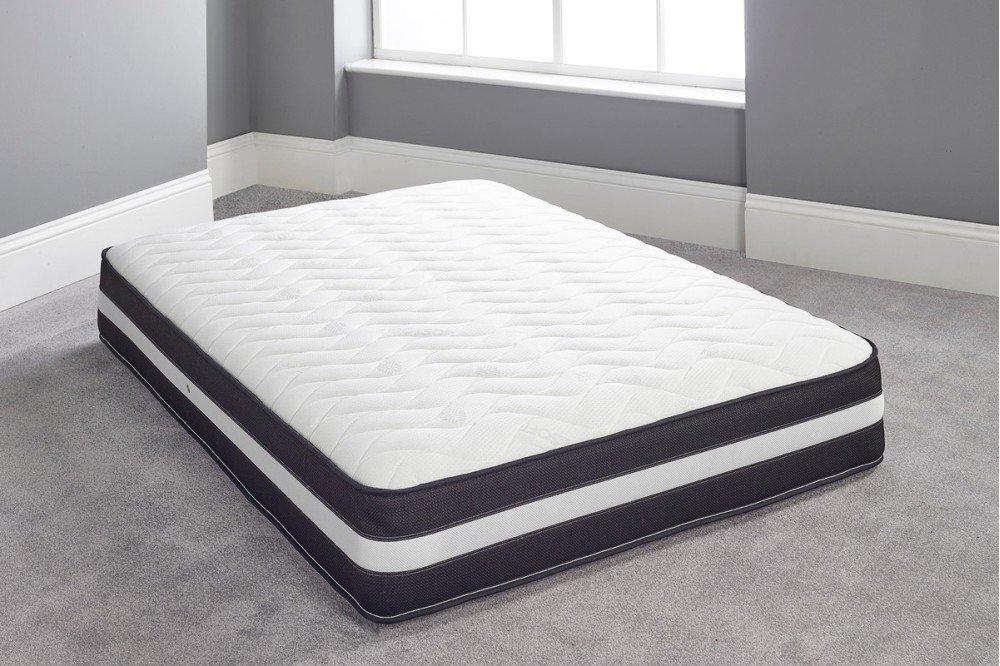
The market intelligence data has specific, practical implications for anyone buying a mattress in South Africa in 2026. Here are six decisions the data argues for — not as marketing, but as genuine consumer intelligence.
The data from the 2025 Sloom Sleep Census showed a 12.4-point sleep quality improvement between old and new mattresses. Within the new mattress category, the mid-range (R5,000–R15,000) delivers meaningful sleep quality at a cost-per-night that makes the upgrade obviously rational. The entry tier is appropriate for guest rooms; the main bedroom deserves better.
The hybrid segment is the fastest-growing in the global mattress market for a reason. Combining pocket spring support with foam comfort layers, it addresses the two most common SA sleep complaints (physical discomfort and temperature) in a single product. If your budget reaches R10,000, a hybrid will outperform a pure-foam or basic innerspring product of equivalent price.
This is one of the most underappreciated purchase decisions in the SA market. In coastal provinces (Western Cape, KwaZulu-Natal), high humidity causes heat retention in foam mattresses to be noticeably worse than on the dry Highveld. Pocket spring and latex mattresses breathe significantly better in humid conditions. Buyers in Durban or Cape Town who are sleeping hot on a foam mattress are not experiencing a design flaw — they are experiencing a climate mismatch.
At 7.19% annual market growth, a R10,000 mattress today will cost approximately R10,719 a year from now, all else being equal. More practically: rising raw material costs (polyurethane foam costs projected to rise 15% per Ken Research), VC 9092 compliance costs, and rand depreciation all compound over time. There is no data argument for waiting if you have already identified a purchase you need to make.
Since 2023, all mattresses sold in South Africa must comply with the Compulsory Specification for Mattresses (VC 9092), enforced by the National Regulator for Compulsory Specifications (NRCS). This covers flammability, chemical content, and labelling. If a retailer cannot confirm their products are NRCS-certified, treat that as a significant red flag — and a meaningful quality indicator for retailers who do prominently display compliance.
With online mattress retail growing rapidly and direct-to-consumer brands bypassing traditional retail markup, genuine price advantages exist online. However, the same competitive landscape that reduces prices also enables low-quality unregulated products to enter the market. Always verify VC 9092 compliance, warranty terms, and return policy before purchasing online. A 100-night trial period is the industry standard among reputable online-first brands.
Frequently Asked Questions
What are the statistics on South Africa’s mattress market?
The South African mattress and bedding market is valued at approximately USD 1.2 billion (R22 billion) on a broad measure including all bedding products, according to Research & Markets. The consumer mattress segment specifically was valued at USD 287–769 million in 2024 depending on scope, growing at a CAGR of 6.26%–7.19% through 2033. South Africa is the largest mattress market in the Middle East and Africa region and generates approximately 1.62% of global mattress market revenue.
What mattress type is most popular in South Africa?
Foam (including memory foam) is the largest segment by revenue, accounting for approximately 36% of the market, according to Grand View Research. Innerspring and pocket spring mattresses hold the second-largest share. However, hybrid mattresses are the fastest-growing segment both globally and in South Africa — combining foam comfort layers with spring support systems, they are increasingly the choice of mid-to-upper-market buyers.
How much do South Africans spend on a mattress?
Based on market size and household data, the average South African household spends approximately R8,000–R12,000 on a mattress purchase at the point of buying. The market is structured in three tiers: budget (R1,500–R5,000), mid-range (R5,000–R15,000), and premium/luxury (R15,000–R80,000+). The mid-range segment is the value sweet spot — delivering meaningful sleep quality improvement at a cost of under R5 per night over an 8-year lifespan.
What is the VC 9092 compulsory specification for mattresses?
VC 9092 is South Africa’s Compulsory Specification for Mattresses, enacted in 2023 by the National Regulator for Compulsory Specifications (NRCS). It requires all mattresses sold in South Africa to comply with specific health and safety standards, covering flammability resistance, chemical content limits, and product labelling requirements. Manufacturers must obtain NRCS certification for materials used. Compliance verification is an important quality check buyers should perform before purchasing — particularly for lower-priced products from unfamiliar brands.
Is the SA mattress market growing?
Yes — strongly. The South African mattress market is forecast to grow at a CAGR of 6.26%–7.19% through 2033, outpacing both GDP growth and general consumer inflation. The projected market size by 2033 is USD 1.3 billion (approximately R24 billion). Growth is driven by sleep health awareness, first-time homeownership, urbanisation, hospitality sector expansion, and the rising quality expectations of the South African middle class. Prices are expected to continue rising over this period.
Sources & Further Reading
- Research & Markets — South Africa Mattress & Bedding Industry Market (USD 1.2Bn valuation)
- IMARC Group — South Africa Mattress Market 2025–2033 (7.19% CAGR)
- Deep Market Insights — South Africa Mattress Market 2025–2033 (6.26% CAGR)
- Grand View Research — South Africa Mattress Market Size & Outlook 2025–2030
- Research & Markets — South Africa Mattress Market Overview 2027 (Bonafide Research)
- Global Market Insights — Mattress Market Share, Statistics & Forecast 2025–2034
- Sloom — 2025 National Sleep Census (mattress age penalty data)
- ooba Home Loans — oobarometer Q3 2025 (first-time buyer data)
- Beds and All — South African Bed and Mattress Specialists
Market valuations vary across research methodologies. The R22 billion figure refers to the full mattress and bedding market on a five-year historical basis (Research & Markets). Narrower measures of the consumer mattress segment range from USD 287–769 million depending on scope. All figures have been converted at approximately R18.50/USD for context. This article is for informational purposes only. Next planned update: October 2026.